- Primary Keyword: should I start a Substack
- Secondary Keywords: Substack pros and cons, newsletter platform comparison, owned audience marketing, Substack monetization strategies, digital media business model
- Meta Title: Should I Start a Substack? The Pros, Cons, and 2026 Strategy
- Meta Description: Discover if Substack is right for your brand. Evaluate the core pros, cons, monetization mechanics, and omnichannel workflows to build an audience. .
Should I start a substack? Pros and cons of the platform
Ditch volatile algorithms. Build a direct-to-inbox connection to turn fleeting social attention into predictable, long-term brand equity and revenue.
The Core Pros and Cons of Substack for Brands
Deciding whether to build your owned audience marketing ecosystem on Substack requires analyzing the fundamental architectural tradeoffs of the platform.
The Advantages (The Pros)
- Zero Upfront Capital Expenditure: The platform is entirely free to launch, charging no monthly hosting fees or tier-based subscriber penalties regardless of how large your database grows.
- Native Discovery Engine:Features like the Substack Recommendations network, algorithmic leaderboards, and native cross-subscribing accounts drive organic growth without ad spend.
.
- Built-In Monetization Architecture:Launch premium subscriptions, paywalled posts, and member tiers with no custom code or API configuration.
- Frictionless User Experience: The platform features a hyper-minimalist writing interface, clean reading layouts, and single-click checkout processes powered by Stripe integrations.
The Limitations (The Cons)
- High Revenue Commission Fees: The platform’s 10% revenue commission becomes increasingly punitive as your subscription income scales.
- Severe Design and Brand Customization Constraints:Uniform templates restrict custom CSS, advanced landing page design variations, and unique brand styling.
- Rudimentary Analytics & Technical Tracking Data: Substack lacks deep tracking pixels, attribution dashboards, and robust funnel visualizations for pros.
- Limited Technical Control and Feature Extensibility: You cannot build complex automated onboarding, dynamic behavioral segmentation, or independent magnets.
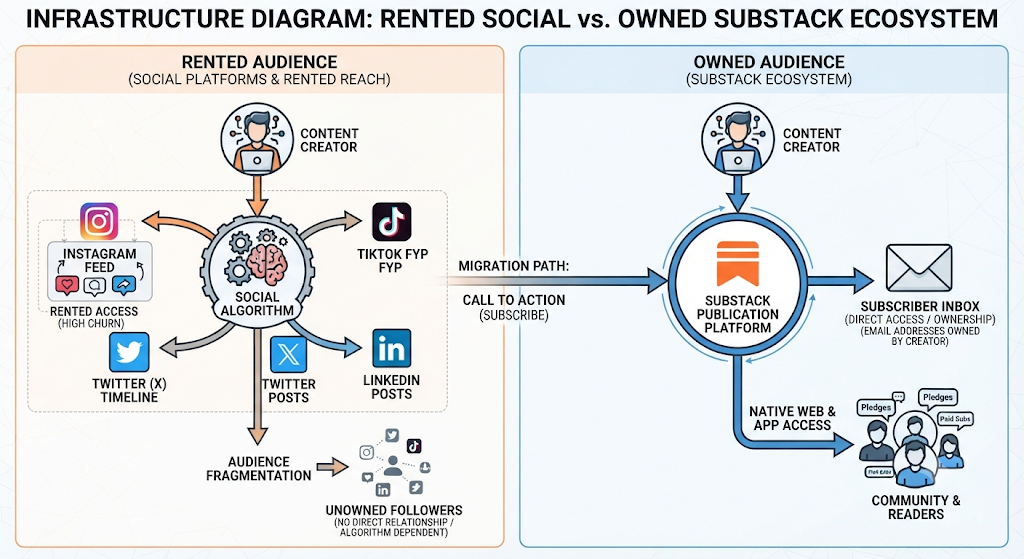
Why Traditional Social Media Marketing Fails in Today’s Market
Chasing vanity metrics on social media is a dead end. Shift to high-intent, conversion-focused communication to protect your brand from algorithm shifts.
Maximizing discoverability requires combining owned assets with modern, distribution-optimized optimization techniques like social media SEO.
The Core Pillars of a High-Converting Omnichannel Strategy
A resilient digital media framework requires building on top of four immutable operational pillars that transition users from casual observers into brand advocates.
+—————————————————————–+
| HIGH-CONVERTING OMNICHANNEL PILLARS |
+—————————————————————–+
| 1. BRAND POSITIONING | 2. AUDIENCE PSYCHOGRAPHICS |
| Establish unmatched domain | Map pain points, hidden fears |
| authority & distinct narrative| and structural motivations. |
+——————————–+——————————–+
| 3. CHANNEL SELECTION | 4. DATA TRACKING & ROI |
| Deploy content to high-intent | Monitor multi-touch funnels |
| native engagement engines. | and client acquisition costs. |
+—————————————————————–+
Brand Positioning & Authority
Define your target audience and justify your editorial lens. Build authority by injecting primary data, real-world experience, and unique perspectives.
Audience Psychographics
Map your reader’s deep professional pain points, daily anxieties, and motivations. Write directly to their operational frustrations for instant resonance.
Channel Selection
Deploying resources to the wrong networks will exhaust your production budgets without returning meaningful traffic or lead volume.
For example, B2B enterprises often find value by deploying a comprehensive ultimate b2b growth playbook on professional networks rather than chasing consumers on video platforms.
Data Tracking & ROI
Measuring the exact multi-touch acquisition path from an anonymous platform impression to a registered email subscriber is entirely non-negotiable.
If you cannot track your cost per acquisition and customer lifetime value across every channel, your strategy is merely a guess.
Frameworks for Omnichannel Content Creation & Repurposing
Maximizing structural content efficiency allows small teams to generate massive, high-impact distribution footprints across multiple digital channels simultaneously.
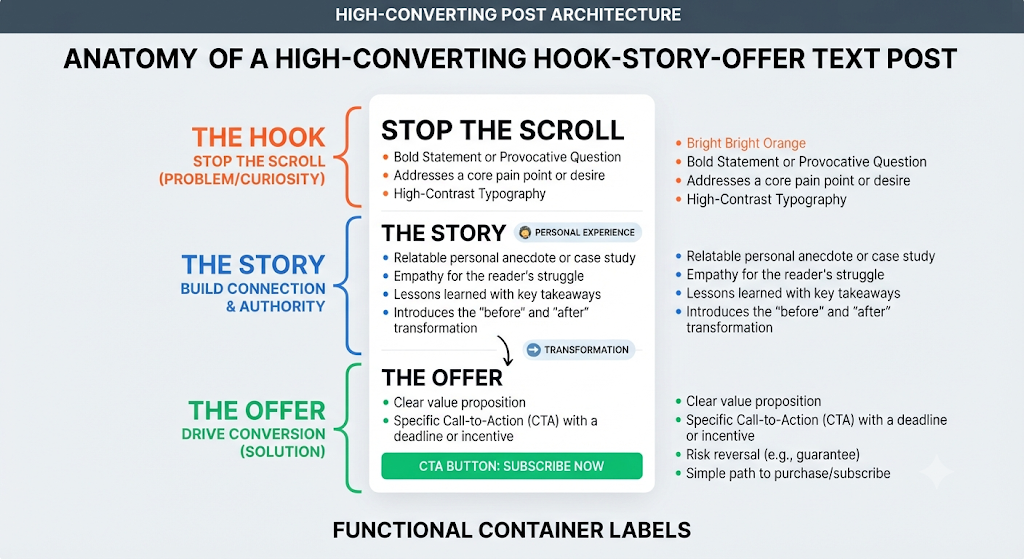
The Hook-Story-Offer Architecture
Capture attention in three seconds. Use a specific Hook, a story-driven value bridge, and a high-value Offer to drive clear conversion-led actions.
Short-Form Video Content Automation
Dominate feeds with high-retention tactics like kinetic typography and tight loops. Strip all filler; deliver clear, authoritative, immediate value.
Scale Production with an Organized Editorial Matrix
Sustaining an omnichannel content footprint requires building a centralized, highly systematic social media content calendar infrastructure to manage creation pipelines.
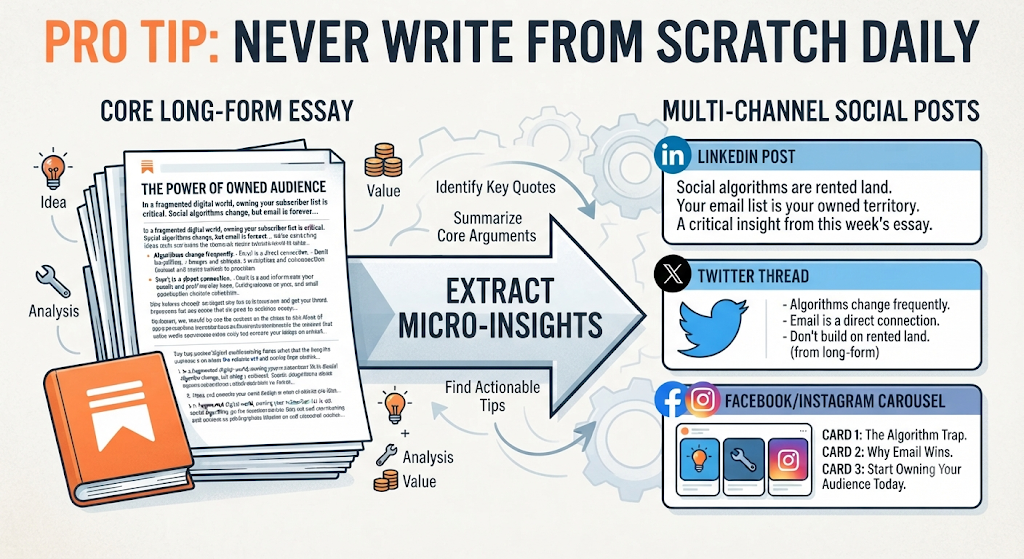
Batch production cycles to stop context-switching. Use long-form essays as source material for weekly content and advanced management tools.
. Leveraging automated ai agents for social media management handles low-level text formatting, scheduling coordination, and standard programmatic distribution tasks flawlessly.
Pro Tip: Never write individual platform posts sequentially from scratch every single day. Always extract micro-insights directly from your core long-form essays to ensure strict consistency across all marketing channels.
The Substack Growth Architecture: Step-by-Step Implementation
Building a valuable publication asset requires moving past high-level ideas into systematic, daily audience acquisition processes.
Step 1: Formulate Your Unique Editorial Lens
Identify your unique value. Ask why an executive would read your newsletter. Promise professional gains, time savings, or deep intelligence.
.
Step 2: Establish a Fixed Operational Cadence
Consistency builds reading habits. Choose a fixed schedule that matches your audience’s downtime and protect it to demonstrate operational precision.
Step 3: Engineer Social Distribution Bridges
Stop posting empty links. Create bridge content—summarize conclusions and share key charts directly in the feed to drive clicks to your signup.
Step 4: Conduct Monthly Conversion Audits
Analyze 30-day metrics: track growth, open rates, and click-throughs. Identify high-intent channels and reallocate resources to lower acquisition costs.
.
[Social Network Impression]
│
▼ (Bridge Content Summary)
[High-Value Value Snippet]
│
▼ (Contextual Substack Link)
[Landing Page Conversion]
│
▼ (Stripe Premium Tier Option)
[Paid Monthly Subscriber]
Deep Newsletter Platform Comparison Matrix
Selecting an infrastructure partner depends entirely on your current volume, long-term technical needs, and monetization strategy.
| Structural Criteria | Substack Platform | Beehiiv System | Ghost Infrastructure | ConvertKit Engine |
| Baseline Subscription Cost | Completely Free ($0/mo) | Flat Tier Pricing Plans | Flat Tier or Self-Hosted | Tier Pricing by Volume |
| Platform Revenue Cut | 10% Flat Transaction Fee | 0% Platform Commission | 0% Platform Commission | 0% Platform Commission |
| Design Flexibility | Heavily Restricted Layouts | Moderate Customization | Total Design Autonomy | High Funnel Flexibility |
| API Customization | Severely Limited Controls | Robust Developer API | Full Open-Source Access | Extensive Integrations |
| Native Referral System | High Network Recommendations | Boost Ad Network Matrix | Minimal Native Network | Partner Network Matrix |
Advanced Monetization & Revenue Models
Transforming an active reader base into a sustainable corporate cash-flow engine requires deploying multiple overlapping monetization frameworks.
The Premium Subscription Paywall Blueprint
Convert free readers into recurring revenue. Separate broad educational guides from proprietary deep-dives, locking technical insights behind a paywall.
Native Brand Sponsorship Networks
Monetize your concentrated audience with premium B2B sponsors. Use native, contextual text recommendations instead of low-quality banner ads.
The Ecosystem Ascension Ladder
Use your newsletter as an organic lead magnet. Build long-term trust, then convert high-intent readers into high-ticket clients and consulting partners.
Warning: Prioritize free acquisition loops until you hit 1,000 hyper-engaged subscribers. Avoid activating a paywall until you have reached this critical threshold.
Common Pitfalls and Budget Drains in Platform Scaling
Scaling an audience engine reveals significant operational failure points that can quickly drain your marketing budgets if unmanaged.
Diluting Distribution Across Too Many Channels
Avoid platform fragmentation; it leads to superficial, uninspired content. Master one organic channel completely before expanding into secondary distribution loops.
Overlooking Audience Data Portability
Own your subscriber data. Export CSVs regularly to ensure platform independence and protect your business’s core equity value.
Buying Fragmented, Low-Quality Engagement
Never buy subscribers or use click-farms. Ghost profiles ruin deliverability and algorithmic reach. Prioritize database quality over vanity metrics.
Future Trends: Personalization, AI Feeds, and Decentralized Content
AI is shifting discovery from keyword-matching to semantic context. Future-proof your business by building specialized, human-centric communities that prioritize deep domain expertise over generic content.
Own your audience relationships through decentralized protocols to bypass algorithmic volatility. Success hinges on rigorous execution, authentic narratives, and the strategic agility to turn your publication into a resilient, profitable asset.
Next Steps & Resource Directories
[Main Hub] > [Digital Growth Strategy]