- Meta Title: LinkedIn Algorithm & Content Strategy: 2026 Optimization Guide
- Meta Description: Master the 2026 LinkedIn algorithm. Learn how to build a content matrix, optimize dwell time, and scale organic reach with this technical B2B framework.
- Primary Keyword: LinkedIn algorithm and content strategy
- Secondary Keywords: LinkedIn content matrix, LinkedIn format optimization, professional network organic reach, B2B content distribution framework
LinkedIn Algorithm & Content Strategy
In 2026, LinkedIn success requires trading viral hacks for a data-driven B2B strategy aligned with the platform’s core semantic infrastructure.
Core Resolution: The 2026 LinkedIn Algorithmic Architecture
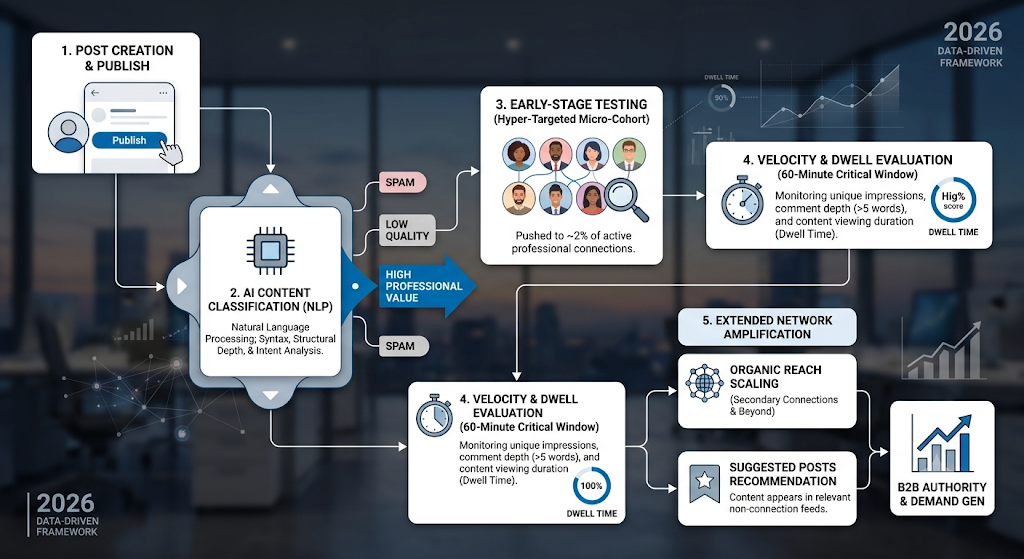
LinkedIn’s current feed distribution engine relies heavily on multi-stage content evaluation filters to separate high-value insights from low-effort text blocks.
Understanding this pipeline is the first step toward building a sustainable organic framework.
The Multi-Stage Distribution Pipeline
When you hit publish, your content undergoes an immediate automated inspection that evaluates syntax, structural depth, and intent markers.
- Stage 1: Classification: The system analyzes text blocks using advanced natural language processing models to classify the post into three tiers: spam, low quality, or clear professional value.
- Stage 2: Early Testing: High-value categorized posts are pushed to a hyper-targeted micro-cohort of your active connections to test initial reception metrics.
- Stage 3: Velocity & Dwell Evaluation: The system monitors user interactions during the first 60 minutes, looking at deep engagement signs rather than superficial interactions.
- Stage 4: Extended Network Amplification: Posts clearing the engagement hurdles are introduced into the broader network via the secondary connection pool and the Suggested Posts recommendation module.
The Death of Engagement Pods and Viral Loops
Superficial interactions like generic comments and immediate likes have been fully neutralized by the platform’s focus on meaningful professional dialogue.
- Algorithmic Weight Shift: Simple reactions carry less than 10% of the distribution weight compared to long-form text comments containing domain-specific keywords.
- Dwell Time Optimization: The system measures exactly how long users pause to view or read your post, explicitly tracking if they expand text blocks using the see more button.
- Outbound Link Management: Dropping raw external URLs directly into body text triggers a significant reach penalty to protect platform session durations.
Phase 1: Defining Core Focus Pillars
A bulletproof content engine requires a definitive framework that positions you or your brand as a deep domain authority. Random updates scatter your relevance profile, making it difficult for the semantic system to index your topical niche.
Designing Topical Hegemony
Topical authority is established when your content consistently satisfies technical intent within a specific cluster of concepts.
- Identify Three Core Nodes: Select three distinct sub-verticals within your industry where you possess documented, practical expertise.
- Map Intent to Demographics: Align each node with a specific tier of the executive hierarchy, balancing technical execution tips with high-level strategy notes.
- Audit and Consolidate: Remove adjacent, non-essential topics that dilute your core messaging vectors and confuse your semantic profile.
Pro Tip: Treat your LinkedIn profile like an executive research repository rather than a digital resume. Every single text block you post must connect back to your core topical nodes to build compounding algorithmic authority over time.
Aligning Profiles with Algorithmic Classifiers
LinkedIn processes your entire profile layout—including headline, about section, and experience details—as context when categorizing your posts.
- Headline Keyword Mapping: Place your highest-value professional industry keywords in the first 45 characters of your profile headline.
- Skills Association: Keep your chosen skills section updated and tightly focused on the core competencies that define your chosen industry pillars.
- Validation via Verification: Complete all available identity or workplace verification options to unlock baseline algorithmic trust tiers.
Phase 2: Building the 2026 LinkedIn Content Matrix
Scaling your reach without sacrificing clarity requires turning your abstract pillars into an actionable production schedule. A structured content matrix solves this challenge by blending structural formats with core themes.
Format and Theme Synchronization Strategy
Different content formats evoke unique behavioral signals from the audience, allowing you to manipulate dwell time and engagement velocity intentionally.
+————————+————————+————————+
| Format Type | Primary Algorithmic | Strategic Theme |
| | Lever | Focus |
+————————+————————+————————+
| Text + Image Blocks | Click-Through Rate | Actionable frameworks, |
| | | tactical step-by-steps |
+————————+————————+————————+
| Documents (Carousels) | Extreme Dwell Time | Deep technical deep |
| | | dives, system maps |
+————————+————————+————————+
| Short-Form Video | Retention Velocity | Case study breakdowns, |
| | | raw field insights |
+————————+————————+————————+
Executing the Production Blueprint
To build out a highly efficient workflow, integrate the themes defined within your focus pillars across these proven structural variations.
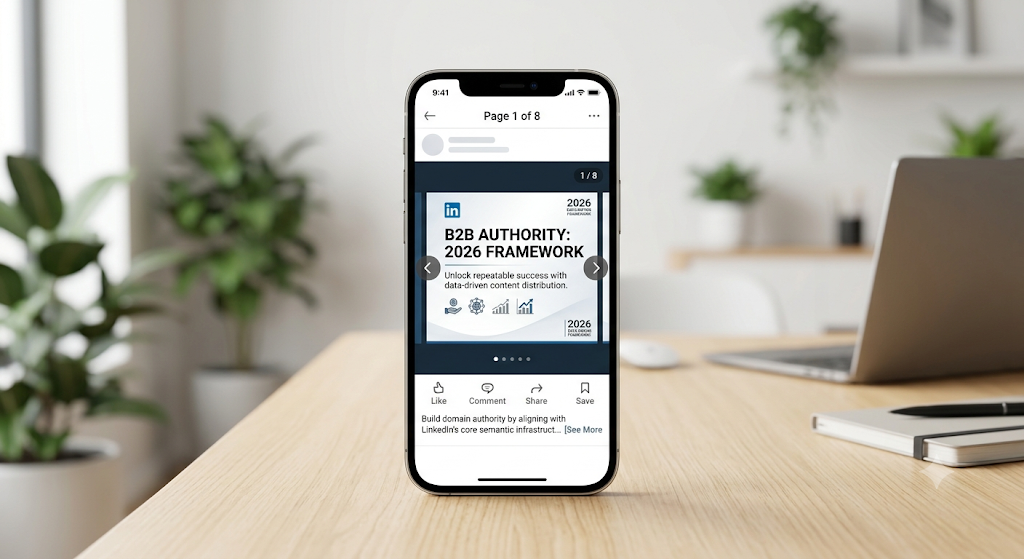
- The Educational Deep Dive: Build comprehensive, slide-based documents that break down a single complex system across 7 to 10 visual pages.
- The Counter-Intuitive Analysis: Challenge common industry folklore by providing proprietary, data-backed evidence that shows an alternative path to success.
- The Practical Implementation Guide: Offer your audience a modular, step-by-step technical breakdown that can be copied and deployed instantly.
To master this specific content orchestration, you can follow our detailed, internal Content Matrix Guide which maps multi-format schedules for high-growth executive profiles.
Phase 3: Format Optimization for Mobile Scannability
The vast majority of B2B decision-makers consume LinkedIn content on mobile viewports during transit or brief operational breaks. If your formatting fails the mobile scannability test, your dwell time metrics will plummet instantly.
Mastering Structural Syntax for the Feed
Writing for mobile devices requires breaking down dense blocks of text into highly skimmable, rhythmic thought streams.
- Hook Engineering: Limit your first two lines of text to a combined total of under 140 characters to ensure the hook is readable before the see more truncation point.
- Line-Break Dynamics: Never group more than three sentences together in a single paragraph block to avoid overwhelming small screens.
- Strategic Visual Hierarchy: Use single-sentence punchlines, indented bullet structures, and short summaries to guide the reader through your analysis seamlessly.
Media Optimization Specifications
When attaching supporting multimedia assets to your textual thoughts, match these precise technical parameters to maintain native resolution.
- Document PDFs: Export all text-heavy carousels using a crisp 1:1 square ratio or a 4:5 vertical canvas to maximize real estate in the mobile feed.
- Static Images: Prioritize high-contrast photography or clean infrastructure diagrams over generic stock imagery that triggers immediate scroll-past behaviors.
- Native Video Specs: Encode vertical videos in 9:16 portrait layouts with hardcoded open captions to capture users browsing with muted audio streams.
Phase 4: Performance Analytics and Iterative Refinement
Data beats intuition every single week. To systematically scale your professional network organic reach, you must regularly interpret the quantitative feedback loop provided by your profile dashboard.
Core Metrics That Drive Distribution Decoupling
Do not fall into the trap of analyzing vanity metrics that fail to impact pipeline value or programmatic reach expansion.
- The Dwell-to-Scroll Ratio: Track how effectively your content captures attention by monitoring total unique impressions alongside median content viewing duration.
- Comment Depth Index: Calculate the percentage of comments that exceed five words in length and contain niche-relevant technical terminology.
- Profile View Conversion: Measure the exact percentage of post viewers who click through to inspect your primary profile home layout.
To simplify the tracking of these technical milestones, utilize our structured Performance Metrics Sheet to quickly visualize week-over-week adjustments to your distribution baseline.
Operationalizing Your Content Refinement Engine
Spend less time guessing why a specific update underperformed and execute an iterative system to upgrade your production quality.
- Double Down on High Performers: When a specific structural format clears baseline distribution targets, create two thematic spin-offs within the same topical cluster.
- Prune Low-Velocity Structures: If a particular media format fails to build meaningful dwell time across three consecutive attempts, pause and re-engineer its execution parameters.
- A/B Test Hook Variables: Test the exact same core concept across two separate weeks using completely different introductory hooks to find your optimal narrative angles.
Common Algorithmic Mistakes & Technical Fixes
Even experienced creators frequently trigger silent distribution penalties due to outdated formatting habits or platform misunderstandings.
- The First Comment Trap: Placing outbound external links inside the comments section was a standard hack for years, but current systems index and penalize this approach heavily if done systematically.
- The Technical Fix: Publish your post as plain text first, allow it to be indexed by the distribution pipeline, and naturally update the main text body with the link after 15 minutes.
- Tagging Extravaganzas: Mentioning multiple industry profiles in your updates to force engagement will backfire if those tagged accounts fail to respond within the first hour.
- The Technical Fix: Only tag individuals who are explicitly mentioned or referenced within the data of your post, keeping tags to a maximum of two profiles.
Future Trends: What to Expect Beyond 2026
The platform continues to push deeper into algorithmic personalization powered by hyper-advanced user contextual modeling.
- AI-Assisted Feed Synthesis: Feeds will increasingly prioritize semantic intent matches, serving your past high-value content to users searching for solutions months after publication.
- The Rise of Corporate Ghost Accounts: Company pages will transition into structured content hubs, acting more like internal trade publications rather than traditional corporate PR portals.
- Zero-Click Resource Dominance: Content formats that summarize massive whitepapers into direct, instantly usable insights within the feed will achieve absolute algorithmic priority.
By mastering this end-to-end framework, your professional network organic reach will shift from a game of chance to a predictable mechanism for B2B authority amplification.
Next Steps & Resource Directories
Browse Full Directories
- [Main Hub] > [B2B Content Distribution Framework]