- Primary Keyword: social media content calendar
- Secondary Keywords: B2B growth playbook, linkedin profile optimization, employee advocacy programs, linkedin algorithm content strategy
- Meta Title: Build a Perfect Social Media Content Calendar for B2B Growth
- Meta Description:Master your content strategy using a scalable social media content calendar. Drive inbound pipeline, optimize profiles, and capture market share.
How I Build Perfect Social Media Content Calendar
TL;DR: Ad-hoc posting limits B2B growth and keeps profiles invisible. A structured social media content calendar transforms sporadic posts into a system that builds authority and captures inbound pipeline.
The Core Operational Framework for Social Media Engine
Unoptimized profiles limit B2B growth. Leaders lack operational structure, not expertise. A systemized content calendar builds authority and inbound leads.
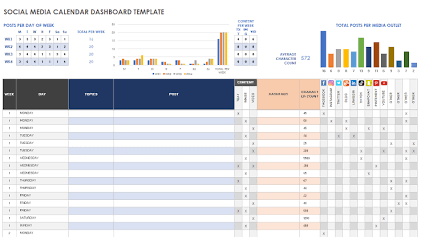
Enterprise Social Media Content Calendar Dashboard Blueprint. Source: Smartsheet
The layout below provides a production database design to track every content asset from initial ideation to live distribution.
| Content Format | Primary Objective | Distribution Cadence | Target Performance Metric |
| Text + Image Post | Storytelling & Authority building | 2x per week | High Engagement & Profile Clicks |
| Document / Carousel | Deep-Dive Educational Guides | 1x per week | Maximum Saves, Shares & Dwell Time |
| Short-Form Video | Humanizing Brand Presence | 1x per week | Video Views & Brand Retention |
| Long-Form Case Study | Intent Generation & Conversion | 1x per week | Inbound Inquiries & DM Conversions |
This multi-format matrix feeds the pipeline, keeping visibility steady without relying on last-minute creative panic.
Why Organic Visibility Matters for B2B Growth Playbooks
Outbound sales yields diminishing returns. A robust personal brand transforms profiles into inbound assets, building authority with buyers at scale.
To master this ecosystem, organizations must execute a comprehensive B2B growth playbook that balances content creation with proactive profile optimization.
The Anatomy of a High-Converting Profile
Traffic without conversion is a wasted metric. Your profile must function as a high-intent landing page.Effective linkedin profile optimization requires rigorous alignment across five core visual and textual elements.
The Anatomy of a High-Converting LinkedIn Profile. Source: Search Engine Journal
1. The Visual Header Layer
Your profile picture and banner form the first impression. Use a high-res headshot and a custom banner showing your value. Clean visuals drive retention.
2. The Transformation Headline
Ditch boring job titles. Use a formula that clearly states who you help, how you help them, and the measurable, high-impact outcome you deliver.
3. The Story-Driven About Section
Write in the first person. Frame your career around the problems you solve, your unique methodology, and data-backed milestones. End with a clear CTA.
4. The Featured Section Showcase
Treat this area as premium digital real estate. Feature top-performing posts, lead magnets, whitepapers, or your booking link. Keep offers updated.
5. The Endorsement & Social Proof Block
Collect recommendations focusing on specific business outcomes rather than generic praise to provide external validation that confirms your core expertise.
Core Strategies for Distribution and Dwell Time
Writing Scroll-Stopping Hooks
The first two lines dictate post survival. If your hook fails to halt a vertical scroll, your copy is invisible. Start with an arresting statistic.
Mastering Platform Distribution Mechanics
Platforms prioritize dwell time—the duration a user spends on your post. Use short paragraphs, white space, and clear bullets to keep users reading.
To align with the current linkedin algorithm content strategy, format long-form updates to reveal the see more button at a natural narrative break.
The Power of Value-Add Commenting
Publishing content is half the battle. True organic reach is built by leaving thoughtful insights on decision-makers’ posts to drive high-value profile clicks.
Step-by-Step Production Sequence to Build Your Calendar
Building a high-intent audience requires moving away from ad-hoc creation. A standardized production pipeline eliminates creative friction and builds an efficient inbound engine.
Step 1: Define Macro Content Pillars
Focus your creation by selecting three to four macro-topics that mirror your core capabilities. All subsequent ideas must map cleanly to these pillars.
Step 2: Establish the Centralized Tracker
Use a dashboard to track ideas, deadlines, statuses, and publication times in one layout. Keep copy and assets organized weeks ahead.
Step 3: Execute in Dedicated Time Blocks
Block out a dedicated two-hour window weekly to draft copy in uninterrupted blocks. Write hooks first, add core takeaways, and close with a clear CTA.
Step 4: Perform Quantitative Review Cycles
Review your platform analytics every 14 days. Identify your top-performing formats, track inbound profile clicks, and iterate your future creation pipeline based on actual reader behavioral data.
Enterprise Social Media Content Calendar Dashboard Blueprint. Source: Smartsh
Content Trends to Dominate This Year
Today’s users demand transparency, favoring unfiltered storytelling that highlights authentic operational failures and hard-won professional lessons.
.
Furthermore, forward-thinking organizations are prioritizing employee advocacy programs, empowering their leadership teams to build public-facing personal brands. AI can speed up brainstorming, but human editing is vital to keep your unique voice and credibility.
Common Mistakes That Ruin Professional Credibility
Robotic tones, zero engagement, and instant pitch spam destroy executive credibility. Treat LinkedIn as a community, not a rigid megaphone.
Comparison of Production Workflows: Ad-Hoc vs. Calendar System
Choosing how to manage your content presence determines your organic efficiency. The vertical comparison below outlines the structural shifts between unstructured posting and an enterprise calendar pipeline.
Ad-Hoc Creation Model
- Time Investment: 30–45 minutes daily spent searching for ideas under pressure.
- Topical Consistency: High risk of drift; content jumps between unrelated concepts
- Analytics Tracking: Minimal; posts are judged on short-term vanity metrics.
- Asset Preparedness: Zero buffer; technical hitches or busy days lead to missed posts.
Systemized Calendar Model
- Time Investment: Focused 2-hour batch-writing block once per week.
- Topical Consistency: Locked down via structured macro pillars.
- Analytics Tracking: bi-weekly reviews that feed data back into production.
- Asset Preparedness: Minimum 7–14 days of content scheduled and approved in advance.
Advanced Playbook: Scaling Inbound Lead Generation
Once your schedule runs smoothly, transition your focus from reach to intent capture. The ultimate goal of building a pipeline is turning attention into conversations.
[Target Impression] ➔ [Value Hook Read] ➔ [Dwell Time Engagement] ➔ [Profile Click] ➔ [Featured Asset Click] ➔ [Inbound Conversion]
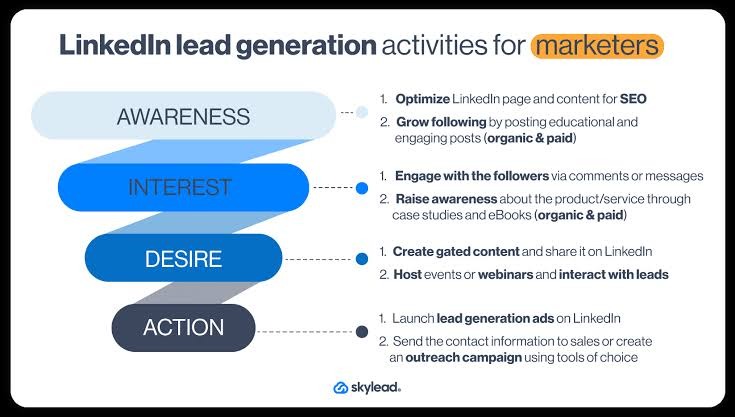
Inbound Lead Generation Funnel Structure. Source: Skylead
Place lead magnets in your featured section. Use authority posts to direct readers there naturally, capturing high-value inbound leads in your inbox.
Next Steps & Resource Directories
Browse Full Directories
[Main Hub] > [B2B Marketing Category]