- Primary Keyword: B2B influencer marketing strategy
- Secondary Keywords: LinkedIn profile optimization, B2B lead generation, personal branding for executives, LinkedIn content strategy
- Meta Title:B2B Influencer Marketing: Drive Impact & Revenue (2026)
- Meta Description:Master B2B influencer marketing strategy to build authority. Optimize your LinkedIn presence and drive high-quality B2B lead generation today.
How B2B Brands Can Drive Impact with Creators and Partnerships
Shift from cold outreach to trust. Learn how to leverage creator partnerships and personal branding to drive B2B growth.
The Evolution of B2B Authority in 2026
The era of the “faceless corporation” is over. Buyers trust people, not landing pages. Leverage influencer strategies to turn authority into leads.
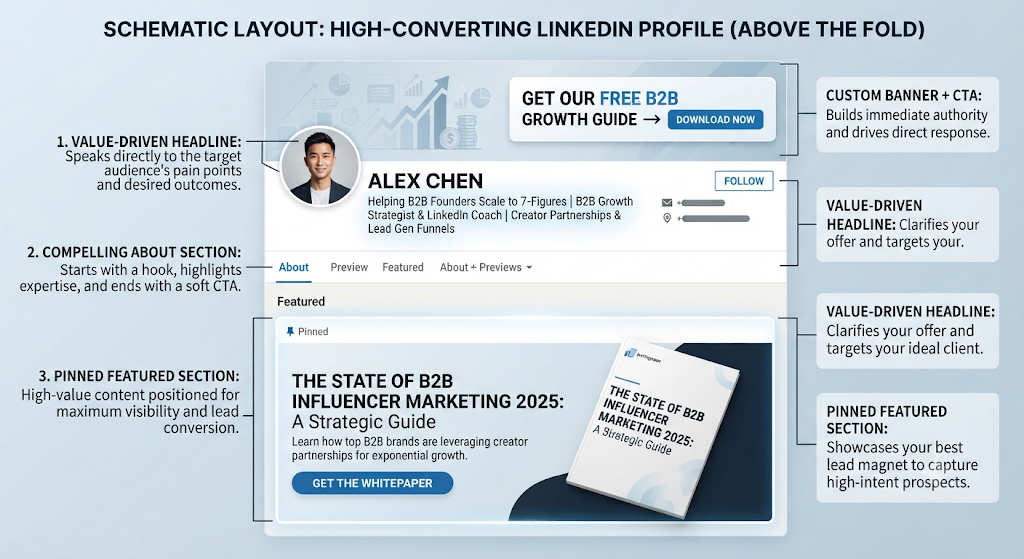
Anatomy of a High-Converting LinkedIn Profile
Your profile is your 24/7 sales representative. If it is not optimized, your content reach is effectively wasted.
| Profile Element | Primary Goal | Key Conversion Benefit |
| Headline | Searchability | Drives clicks from your target niche |
| Banner | Brand Authority | Establishes immediate professional trust |
| About Section | Narrative/Storytelling | Deepens emotional connection |
| Featured Section | Lead Generation | Showcases your best work/offers |
Why LinkedIn Profile Optimization is Your First Step
Without a solid foundation, your LinkedIn profile optimization will fail to convert. Treat it like a high-intent landing page focused on client results.
- Clear Value Proposition: Ensure your headline explicitly states who you help and the transformation you provide.
- Visual Consistency: Your banner should align with your brand identity and invite the visitor to take a specific action.
- The “About” Hook: Use the first three lines to address a burning pain point of your target audience.
Core Strategies for LinkedIn Content Strategy
A successful LinkedIn content strategy relies on consistency, readability, and engagement. In 2026, the algorithm heavily favors “dwell time”—the duration a user spends consuming your content.
- Scroll-Stopping Hooks: The first two lines determine if a user clicks “see more.” Use bold, contrarian, or curiosity-driven opening statements.
- Formatting for Readability: Use whitespace, short paragraphs, and bullet points to ensure your content is mobile-friendly.
- The Power of Comments: Networking in the comments of industry leaders is the fastest way to gain visibility with your target demographic.
Pro Tip: Never post and walk away. Spend 15 minutes before and after posting engaging with others in your industry to prime the algorithm for your own content.
Implementing B2B Influencer Marketing Strategy
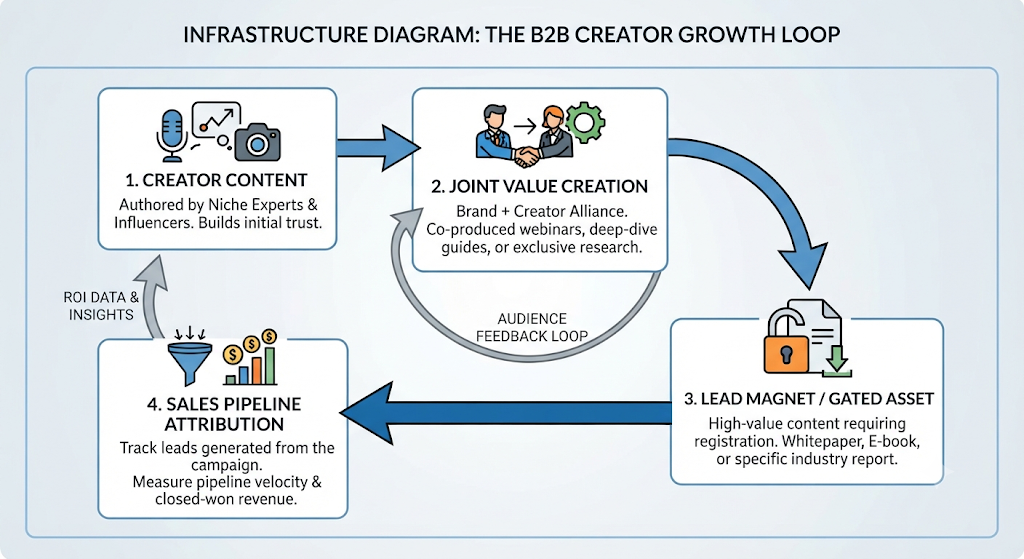
Moving beyond traditional advertisements, brands must embrace alliances. Executing a B2B influencer marketing strategy requires shifting the focus from vanity metrics to pipeline impact.
Phase 1: Niche Discovery
Identify creators who already influence your target decision-makers. Look for subject matter experts (SMEs) with high engagement rates rather than massive, irrelevant followings.
Phase 2: Value-First Outreach
Do not approach creators with a transaction in mind. Offer value first—whether through data collaboration, co-authored reports, or guest contributions—that benefits their existing audience.
Phase 3: Funnel Integration
Tie these collaborations directly to your B2B lead generation efforts. Use co-branded webinars or gated whitepapers as the primary conversion mechanism for these partnerships.
Common Pitfalls: Where Brands Go Wrong
Many companies approach LinkedIn with a “corporate brochure” mindset. This is a fatal mistake in the creator economy.
- The “Corporate Speak” Trap: Avoid hollow jargon. Speak like a human, not a press release.
- Spamming DMs: Never cold-pitch in the first message. Use engagement as your initial point of contact.
- Neglecting Employee Advocacy: Your best influencers are often your own team members. Empower them to share their unique industry perspectives.
Leveraging Personal Branding for Executives
Personal branding for executives is not about vanity; it is about trust. When executives share their vision, the brand becomes relatable and easier to buy from.
- Humanize the Brand: Share “lessons learned” and project failures. This builds more trust than polished marketing copy.
- Data-Backed Insights: Balance storytelling with hard data. This validates your expertise and positions you as a thought leader.
- Consistency: Use scheduling tools to maintain an “always-on” presence that keeps your brand top-of-mind.
The Role of AI in Scaling Your Presence
AI tools have become essential for efficient social media management. While you should use AI to brainstorm hooks or refine drafts, your final voice must remain distinctly human.
- AI for Ideation: Use AI to turn long-form whitepapers into short-form social posts.
- AI for Sentiment Analysis: Use these tools to understand what your target audience is discussing in real-time.
Future Trends: 2026 and Beyond
The future of B2B influence is moving toward “curator-led” marketing. As noise increases, users flock to creators who filter information, not just generate it. Brands that partner with these curators earn outsized trust.
Conclusion
Executing a high-impact B2B influencer strategy requires human-centric content, discipline, and a commitment to real value.